

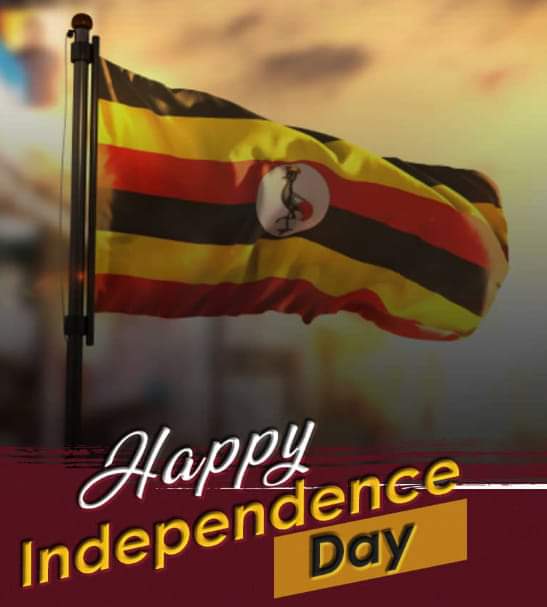
Uganda gained her independence on October 9th 1962. Since 1894 she was a British protectorate that was put together from some very organized kingdoms and chieftaincies that inhabited the lake regions of central Africa. At independence, Dr. Milton Apollo Obote, also leader of the Uganda People’s Congress (UPC) became the first Prime Minister and head of the government.
The Republican leaning UPC came into power through an “unholy” alliance with a pro-mornarchy party called the Kabaka Yekka (KY), which had a stated aim of protecting the institution and power of the kingdom of Buganda. The UPC had earlier on, one year before independence, lost the first ever general election to the Democratic Party(DP) and now needed the strategic partnership of allies to avoid another defeat.
In November 1963, Kabaka Mutesa II King of Buganda was elected ceremonial President of Uganda thus seemingly sealing the political alliance of UPC and KY. However, this marriage of political convenience was short lived since both Obote and Mutesa and their following had differing agendas.
In 1964, Obote championed a bill in Parliament providing for a referendum on the belonging of the counties of Buyaga, Bugangaizi and Buwekula then of Buganda but claimed the neigbouring kingdom of Bunyoro. This culminated in two of the counties opting to secede from Buganda and revert back to the Bunyoro Kingdom. As Kabaka of Buganda and President of Uganda, Sir Edward Mutesa II, was placed in an invidious position of signing the two acts pertaining to the “lost counties”. It was upon accusations of dereliction of duty the President, not to mention other fabricated reasons, that Obote suspended the 1962 constitution on 22nd February 1966 and took over all powers of State, thus giving rise to what came to be known as the 1966 Crisis.
On 15 April 1966, in a Parliament surrounded troops, Obote introduced without notice a new constitution to be voted upon that very day. It was passed without debate and the Prime Minister informed Members of Parliament (MPs) that they would find their copies in their pigeonholes. This constitution came to be known as the Pigeonhole Constitution. Amongst other things, the federal constitutional status of kingdoms was abolished and the office of Prime Minister merged with that of the President and all executive powers became vested in Obote. Uganda was declared a Republic.
The Kabaka and his kingdom establishment at Mengo refused to recognize the supremacy of the pigeonhole constitution, insisting on the 1962 version. This culminated in the 24th May 1966 storming of Kabaka’s palace the Uganda army under the command of General Idi Amin but on the orders of Obote. Although the Kabaka managed to escape, he was exiled in Britain where he later died.
In 1967 Obote abolished all monarchs. Parliament became the constituent assembly and later all political parties were outlawed, except UPC. In a move to the left, Uganda became a one-party-state.
It was against this background that Idi Amin led a disgruntled section of the army to overthrow Obote on 25th January 1971. This coup was met with great jubilation but was to begin an era of terror and enormous tribulation for the people of Uganda. This dark period would last 8 long years. It was also during this period that all Asians, mainly Indians, were expelled from Uganda.
\r\n As a result the economy of Uganda suffered tremendously. The fiscal mismanagement and insecurity that followed dint help the situation.
An estimated 300,000 Ugandans lost their lives through indiscriminate extra judicial killings during Idi Amin’s regime.